Business License

LNB C, X, Ku, Ka, and Q,V,W bands to the L-band,P Band
LNBs Are in Our DNA
At Shenzhen Huashi Digital Technology Co., Ltd., the development and manufacturing of Low Noise Block downconverters (LNBs) has always been our core business. We offer a professional portfolio of LNBs spanning from C-band to Q-band, featuring advanced products designed for diverse ground station applications in satellite communications. Over the years, we have meticulously refined every parameter affecting the Carrier-to-Noise ratio. Today, we deliver commercial products that meet the most demanding market standards.
The LNB is a critical component in any satellite communication system. Mounted on the satellite antenna, it performs two primary functions:
Low Noise Amplification: It amplifies the extremely weak signals received from the satellite, which attenuate significantly over vast distances.
Frequency Down-Conversion: It translates these high-frequency satellite signals to lower intermediate frequencies (IF), making them manageable for satellite receivers.
The defining characteristic of an LNB is its ability to amplify signals while adding minimal noise. This ensures signals remain clear and robust—essential for high-quality satellite TV reception and other satcom applications.
Our LNBs amplify faint satellite signals without significant noise degradation, down-converting frequency blocks from C, X, Ku, Ka, and Q,V,W bands to the L-band,P Band. They play a pivotal role in ground station antennas. Through continuous improvement, we strive to create world-leading products that our customers can rely on.
Designed for durability, our LNBs are built to perform for years in harsh environments. With a standard storage and operating temperature range of -40 to +85ºC (-40 to +181°F) and robust outdoor protection, their reliability is proven by the success of over 100,000 units deployed in daily operations worldwide. We never compromise on component quality.
We encourage you to speak with our existing clients about their experience with us and our products. Every unit we manufacture undergoes individual testing before leaving our facility.
When selecting or comparing LNBs, three key factors should be considered:
High Data Rates / Symbol Rates: High throughput demands exceptional phase noise performance and stable frequency references to maintain signal integrity. Our platform addresses this through significantly reduced phase noise, enhanced internal reference stability (±0.5 ppm from -40 to +85°C with a 10-year calibration interval), and intelligent auto-switching redundancy for seamless transitions between internal and external references—minimizing LO drift while maintaining peak performance.
Low VSWR / Return Loss: Poor matching reduces power transfer efficiency. While we often include low-loss isolators as standard to optimize performance (despite a minor noise figure penalty), our designs minimize mismatches to meet stringent standards without requiring isolators, saving our customers cost and space.
High P1dB and IP3: These specifications reduce the risk of saturation. As a rule of thumb, if your antenna diameter exceeds 3.7 meters, a low-gain LNB should be considered.
Recently Posted
-
Q Band LNB,V Band LNB,Ka Band LNB,LNB,P band LNB,L LNB,C LNB,Ku LNB,X LNB
June 17, 2026Q Band LNB,V Band LNB,Ka Band LNB,LNB,P band LNB,L LNB,C LNB,Ku LNB,X LNBTechnical Article: Guoxin Advanced LNB Solutions for Next Read More
 -
Ku Band Dual-Band LNB Broadcasting & VSAT
June 17, 2026Ku Band Dual-Band LNB Broadcasting & VSAT Ku-Band Dual-Band Block Downconverters: Enhancing Stability and Efficienc
Read More

Contact Us
Recommended Products
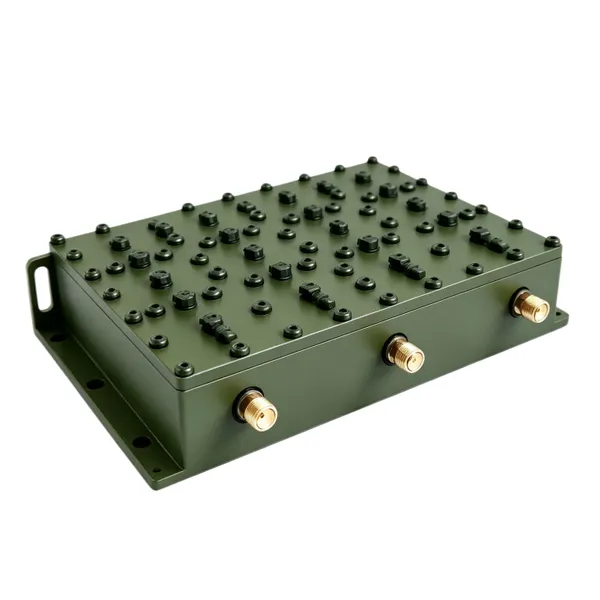
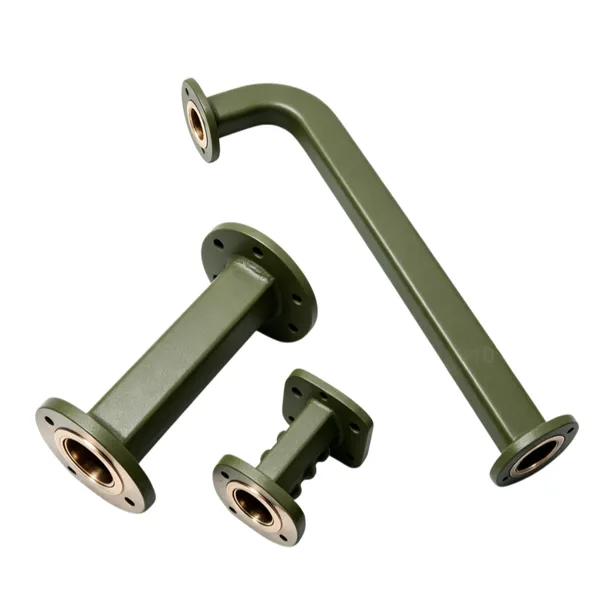
-
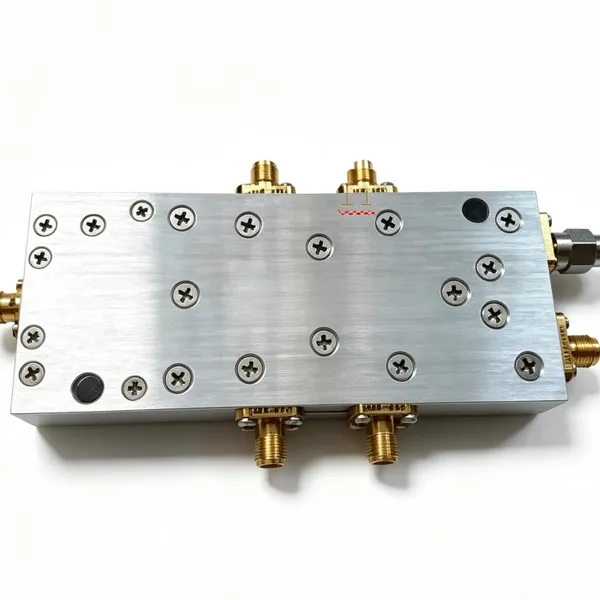
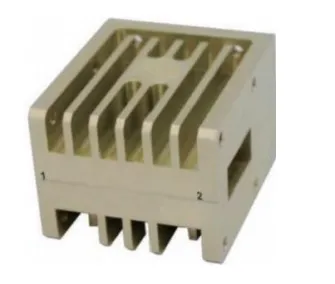
 DC-40GHz Suspended Stripline FiltersUS$ 50MOQ: 1 Combo
 -
DC-40GHz Low Pass FiltersUS$ 50MOQ: 1 Combo
-
Bandstop Filters/Customised 200MHz-68GHz Cavity Bandstop FiltersUS$ 50MOQ: 1 Combo
-
1.4GHz-45.5GHz Bandpass Filters/RF Cavity FiltersUS$ 50MOQ: 1 Combo
-
Ka-band Spaceborne 16-beam Phased Array AntennaUS$ 1165MOQ: 1 Combo